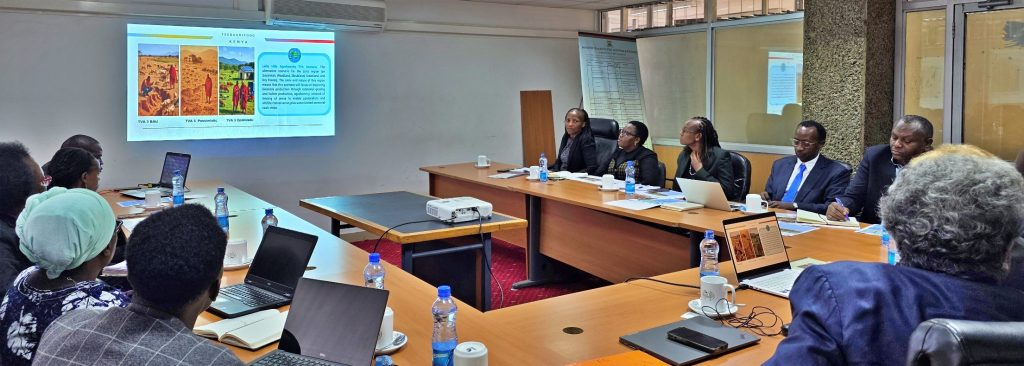
On Tuesday, 9th December 2025, the TEEBAgriFood Kenya Project team convened a strategic engagement meeting with the Kenya Ministry of Agriculture to introduce the Project and explore opportunities for deeper collaboration formally. This meeting built on earlier engagements during the National Technical Committee on Agroecology workshop in Naivasha, Kenya, and a subsequent virtual session that expanded participation and strengthened understanding of the Project’s work in Kenya.The Project team was led by Dr. Salman Hussain, Head of the Economics of Nature Unit and The Economics for Ecosystems and Biodiversity (TEEB) Coordinator, UNEP, and Professor Jacqueline Mc. Glade, the Project’s Principal Investigator from Strathmore University. The rest of the Prject team included Stella Simiyu from TEEB, Jackson Kiok, Project Policy Lead, Rosemary Orlale, Project Communications Lead and Monica Chuchu, Project Data Lead.
From the Ministry of Agriculture, the team present included: Eng. Alice Nyaga, Head, Agricultural Land Management Division, SDA, Eng. Godwin Kuria, Head, Environment Section, SDA, Eng. Angelica Weboko, Soil and Water Section, SDA, Mr. Julius Komunga, Climate Mitigation and Resilience Section, SDA, Ms. Judy Naikumi, Agribusiness Division, SDA, Mr. Moses Kimani, Livestock Sector Coordination, SDL and Hon. Kendi Diana Tarichia, Office of the Cabinet Secretary.
Dr. Salman Hussain, Head of the Economics of Nature Unit at UNEP and global Coordinator of the TEEB initiative, delivered a presentation outlining the global TEEB journey and its demonstrated impact across multiple countries. He highlighted examples from India and Thailand, where the application of the TEEBAgriFood Evaluation Framework has supported the transition to more sustainable food systems, yielding positive outcomes for ecosystems and community well-being. Dr. Hussain also noted that the IKEA Foundation is the primary funder of TEEB activities globally, including the Kenyan project.
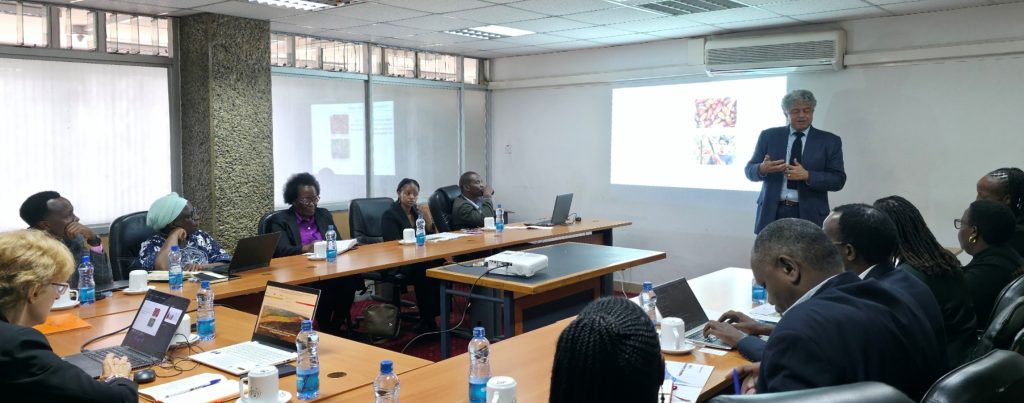
Building on this global perspective, Prof. McGlade presented an overview of the TEEBAgriFood Kenya Project, emphasizing its overarching goal: to contribute to food systems transformation by making a compelling economic case for pro-nature policies. She explained that the project seeks to support sustainable livelihoods and strengthen community cohesion by influencing land-use policies and practices towards climate-resilient food and agricultural systems that enhance ecosystem services and improve human well-being.
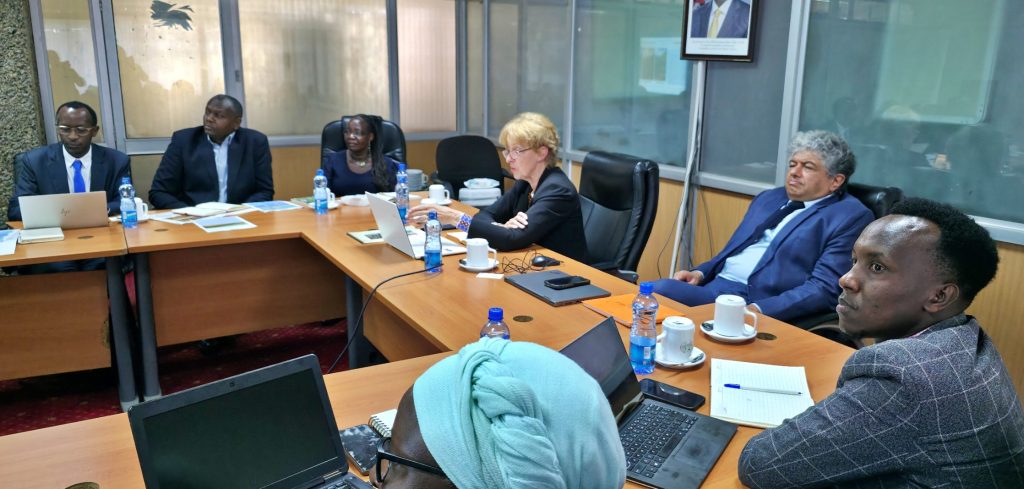
During the discussion session, participants highlighted several areas where the TEEBAgriFood Evaluation Framework is already demonstrating strong relevance to Kenya’s policy landscape. Notably, the framework serves as the analytical backbone of Kenya’s National Agroecology Strategy for Food Systems Transformation (NAS-FST 2024–2033), offering a holistic, multi-capital approach that captures the often-hidden environmental, social, cultural, and economic costs and benefits of food systems. The framework was also recognized as highly relevant to the implementation of key government policies, including the National Soil Management Policy (2023), the Livestock Master Plan, and national climate change strategies.
Ministry officials further noted that data generated through the TEEBAgriFood Kenya Project will significantly strengthen national reporting requirements, including Kenya’s Nationally Determined Contributions (NDCs) under the Paris Agreement. In addition, the project—implemented through Strathmore University Business School—will support targeted capacity building for relevant officers at both national and county government levels to advance Kenya’s food systems transformation agenda.
A key outcome of the meeting was the Ministry of Agriculture’s commitment to establish a core team of technical officers to immediately spearhead collaboration with the TEEBAgriFood Kenya Project. This institutional anchoring is expected to facilitate sustained engagement, co-creation of knowledge, and the practical application of TEEB evidence in policy and planning processes.
The Ministry of Agriculture team also had the opportunity to experience a virtual reality video, which vividly illustrates the urgent need for food systems transformation in Kenya. The immersive experience reinforced the project’s message and stimulated further reflection on the interconnectedness of agriculture, ecosystems, climate action, and human well-being.
Overall, the engagement marked a significant step towards strengthening partnerships between the TEEBAgriFood Kenya Project and the Ministry of Agriculture, laying a solid foundation for collaborative, evidence-driven action to support sustainable and resilient food systems in Kenya.
Article by Juliet Hinga